
Your Clear Aligner Journey

Your clear aligners have been carefully planned to gradually move your teeth towards your new smile.
During treatment, we may also place small tooth-coloured engagers (attachments) onto some of your teeth. These help your aligners achieve particular tooth movements. Engagers are often fitted at an early appointment, commonly your second appointment, although the timing will depend entirely on your individual treatment plan.
This page is here as a useful reminder throughout your treatment. Your personalised instructions will always take priority, but following the advice below will help keep your treatment progressing as planned.
1. Wear your aligners for 22 hours a day
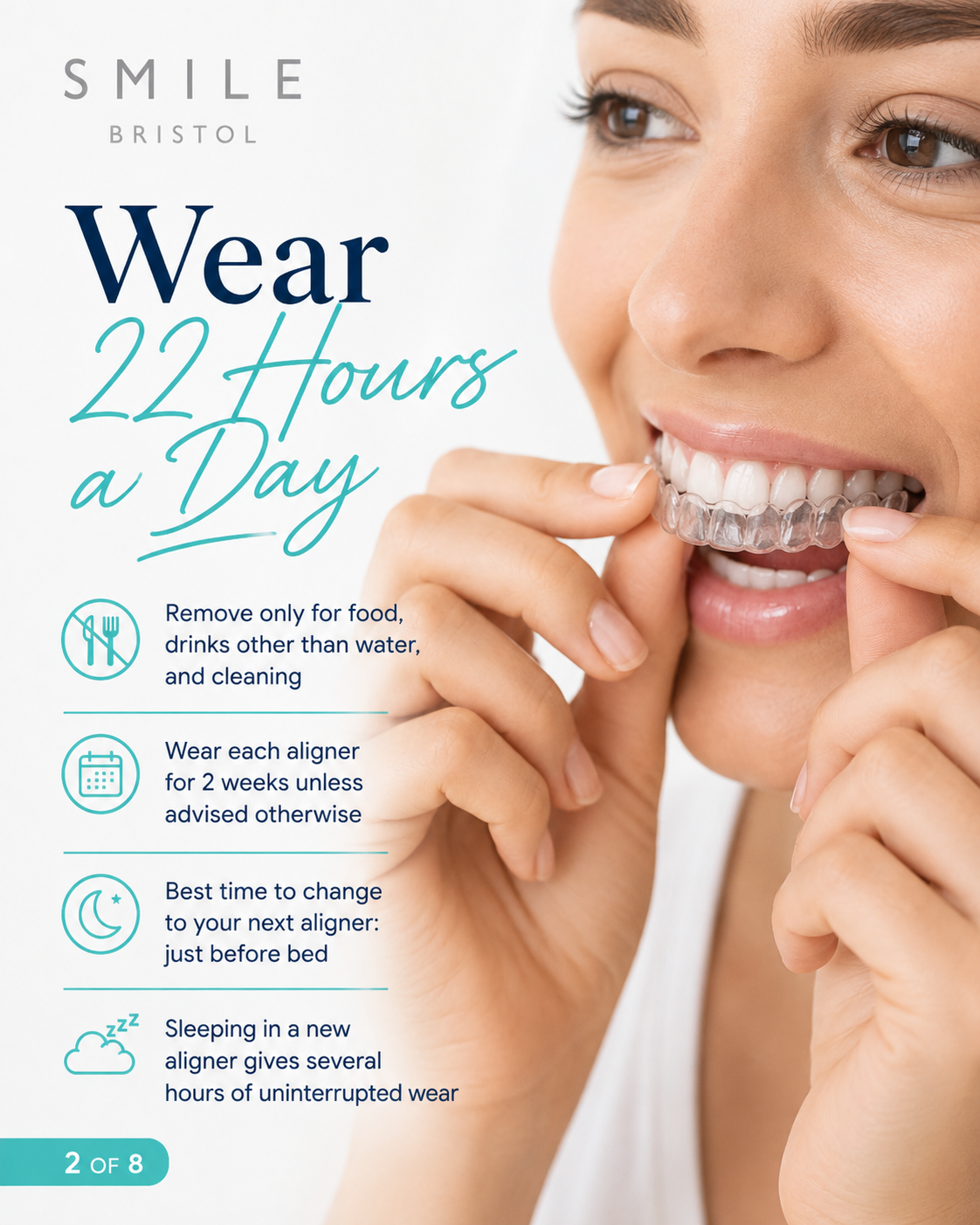
For your aligners to work effectively, they need to be worn for at least 22 hours every day, including while you sleep.
Only remove your aligners to:
Eat
Drink anything other than cold, still water
Brush and clean between your teeth
Clean your aligners
Each aligner is normally worn for 2 weeks before moving onto the next aligner, unless we have specifically advised you otherwise.
When should I change to my next aligner?
Where possible, change to your next aligner just before going to bed. This gives the new aligner several hours of uninterrupted wear while it is at its tightest, helping it to seat fully and begin moving your teeth as planned.
It can also make those first few hours of pressure easier, as you will be asleep for much of the initial adjustment.
Consistent wear is one of the most important factors in keeping your treatment on track.
2. Keep your teeth and aligners clean
Excellent oral hygiene is particularly important during clear aligner treatment.
Food and plaque can become trapped underneath your aligners, increasing the risk of tooth decay, staining and gum inflammation.
Brush your teeth thoroughly and clean between your teeth every day. Whenever possible, clean your teeth before putting your aligners back in after eating.
Cleaning your aligners
To keep your aligners clean:
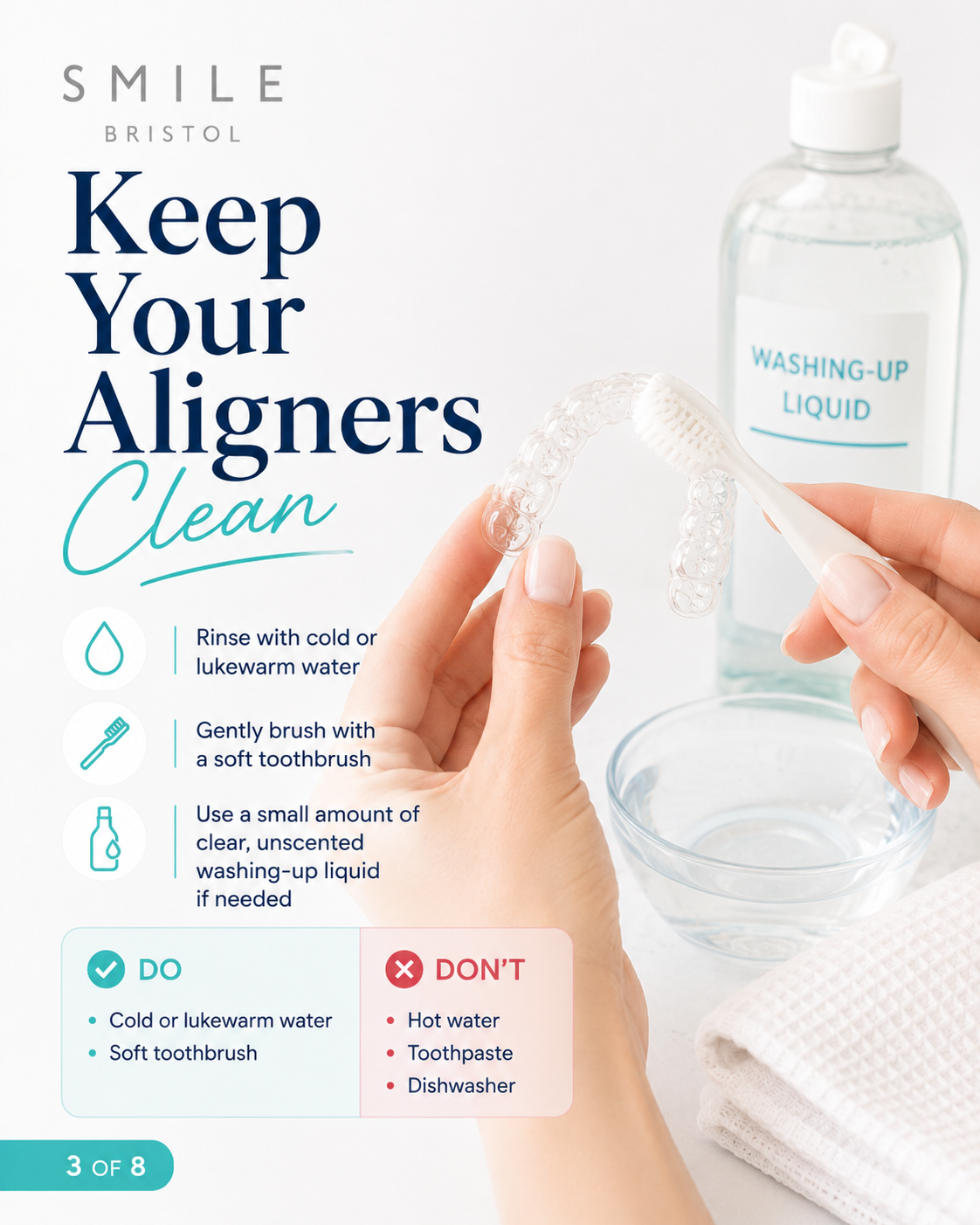
Rinse them with cold or lukewarm water
Gently brush them using a soft toothbrush
Use a small amount of clear, ideally unscented washing-up liquid if needed
Avoid using hot water, as this can distort the aligners, and avoid cleaning them with toothpaste as this can scratch their surface.
Please continue attending your usual dental check-ups and hygiene appointments throughout your orthodontic treatment.
3. Some discomfort is normal
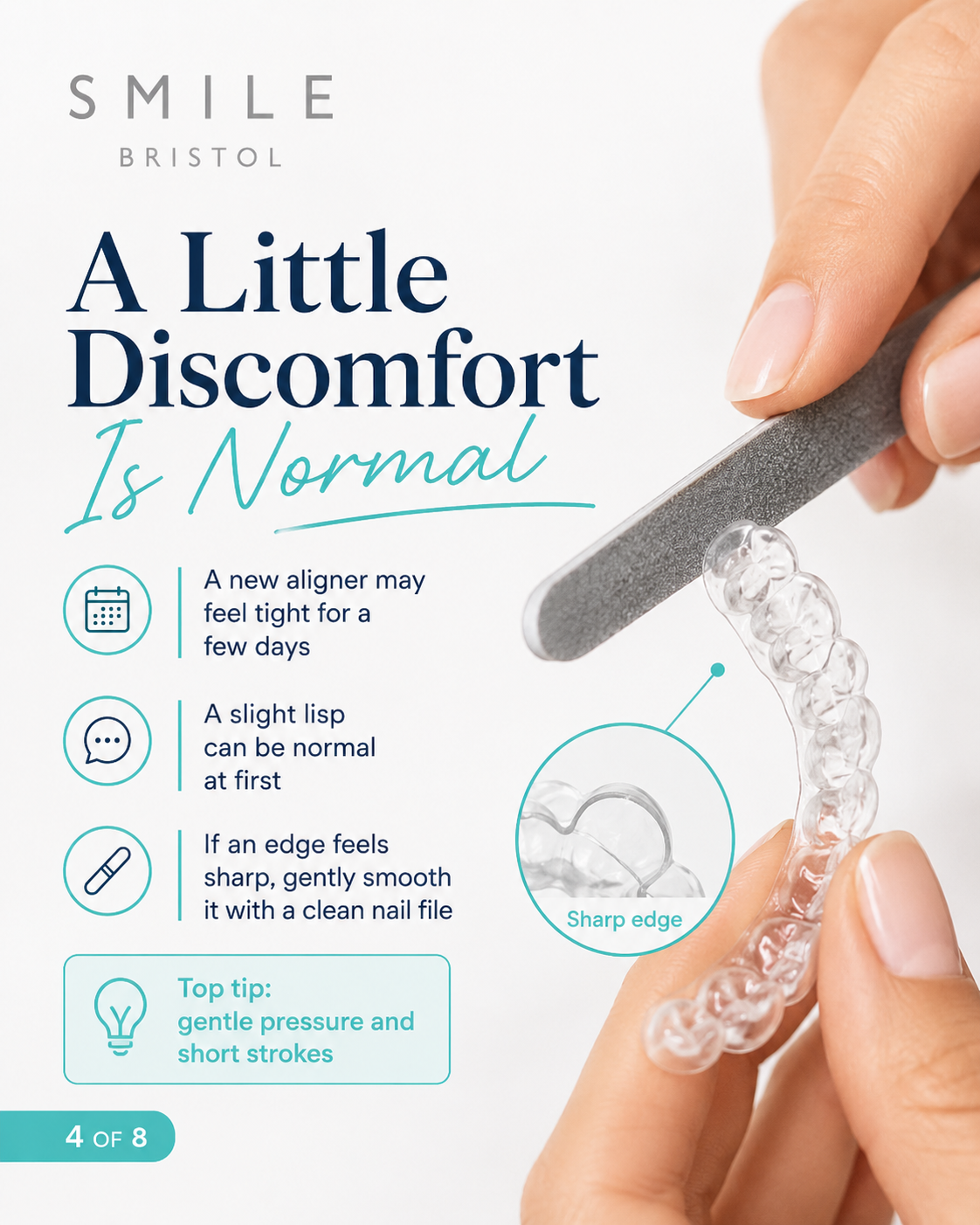
A new aligner will usually feel quite tight and your teeth may feel tender for the first few days.
This is a normal part of tooth movement and usually settles fairly quickly. If required, you can use your usual over-the-counter pain relief, provided this is normally suitable for you.
Some patients also notice a slight lisp while wearing their aligners. This usually improves as your tongue becomes accustomed to them.
Occasionally, the edge of an aligner may feel slightly sharp against your tongue, cheek or gum. If this happens, you can very gently smooth the sharp area with a clean nail file.
If an aligner continues to cause irritation or discomfort, please contact the clinic.
4. Use your chewies
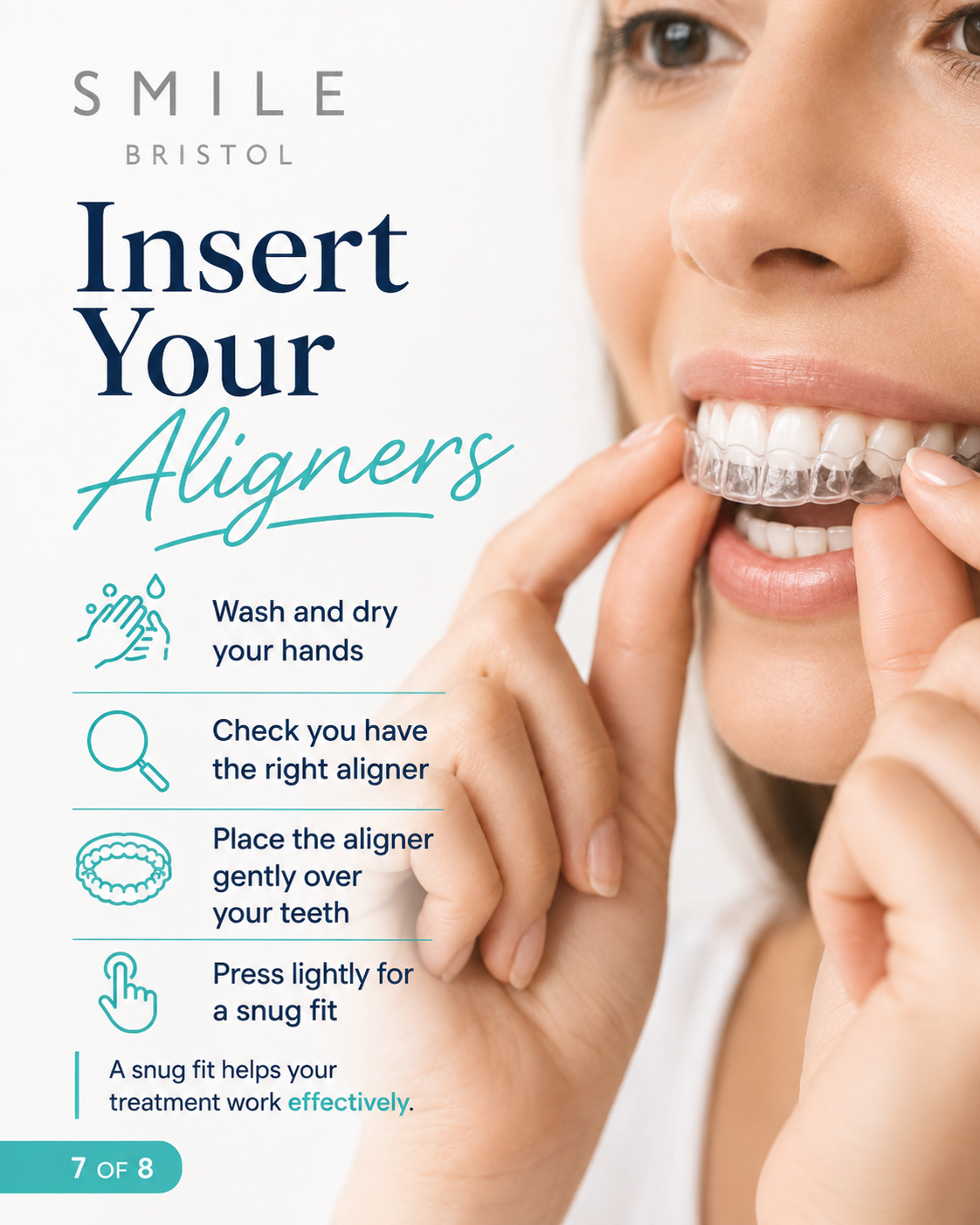
Your aligners work best when they are sitting completely over your teeth.
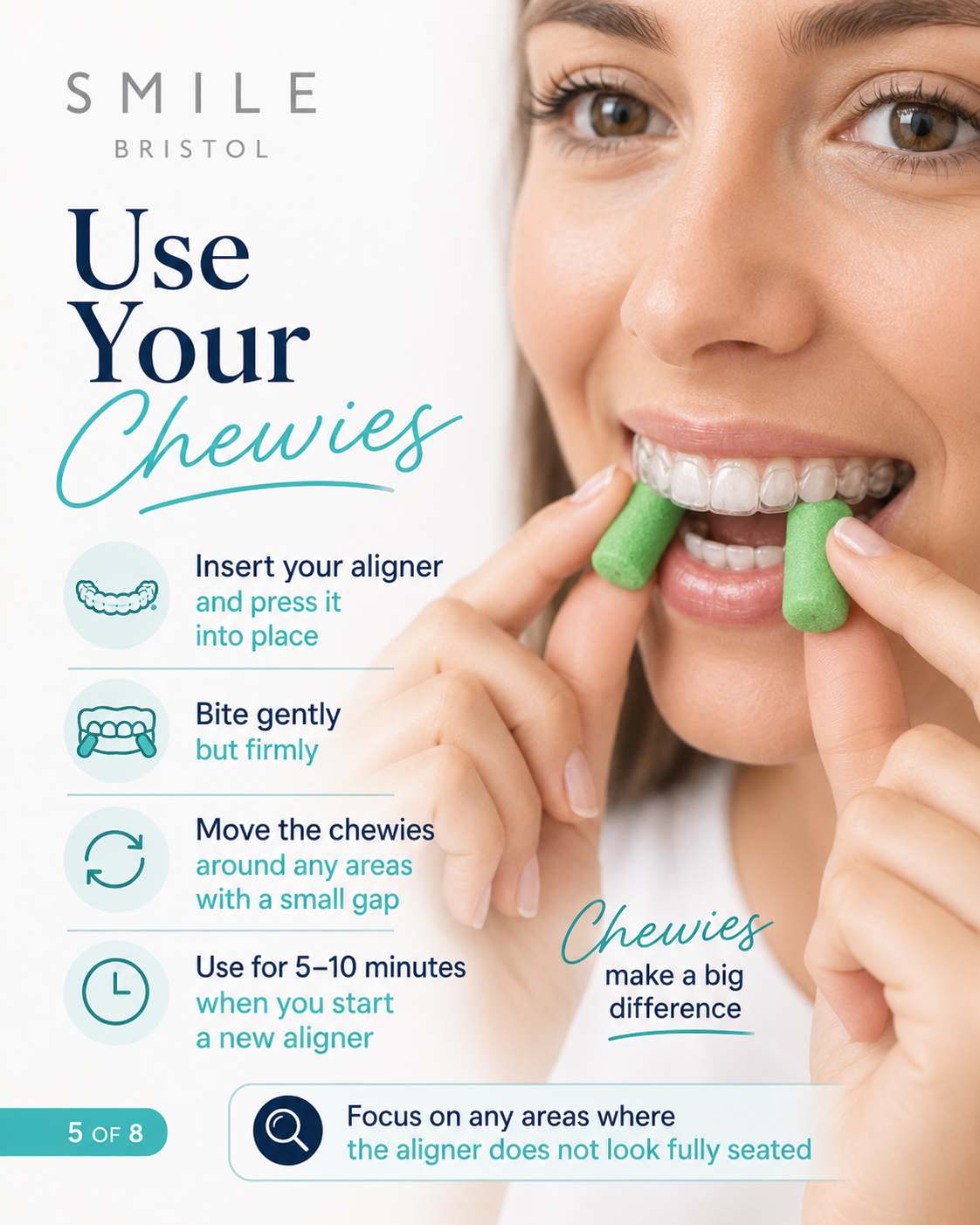
After putting an aligner in, press it firmly into position with your fingers and then use your chewies.
Bite gently but firmly onto the chewie and move it around your mouth, concentrating particularly on areas where you can see a small gap between the aligner and the tooth.
When changing to a new aligner, aim to use your chewies for around 10 minutes, particularly during the first three days.
You can also use them whenever you reinsert your aligners or if you notice that an area does not appear to be seating fully.
Chewies may look simple, but they are an important part of helping your aligners fit properly and keeping your treatment on track.
5. Removing your aligners
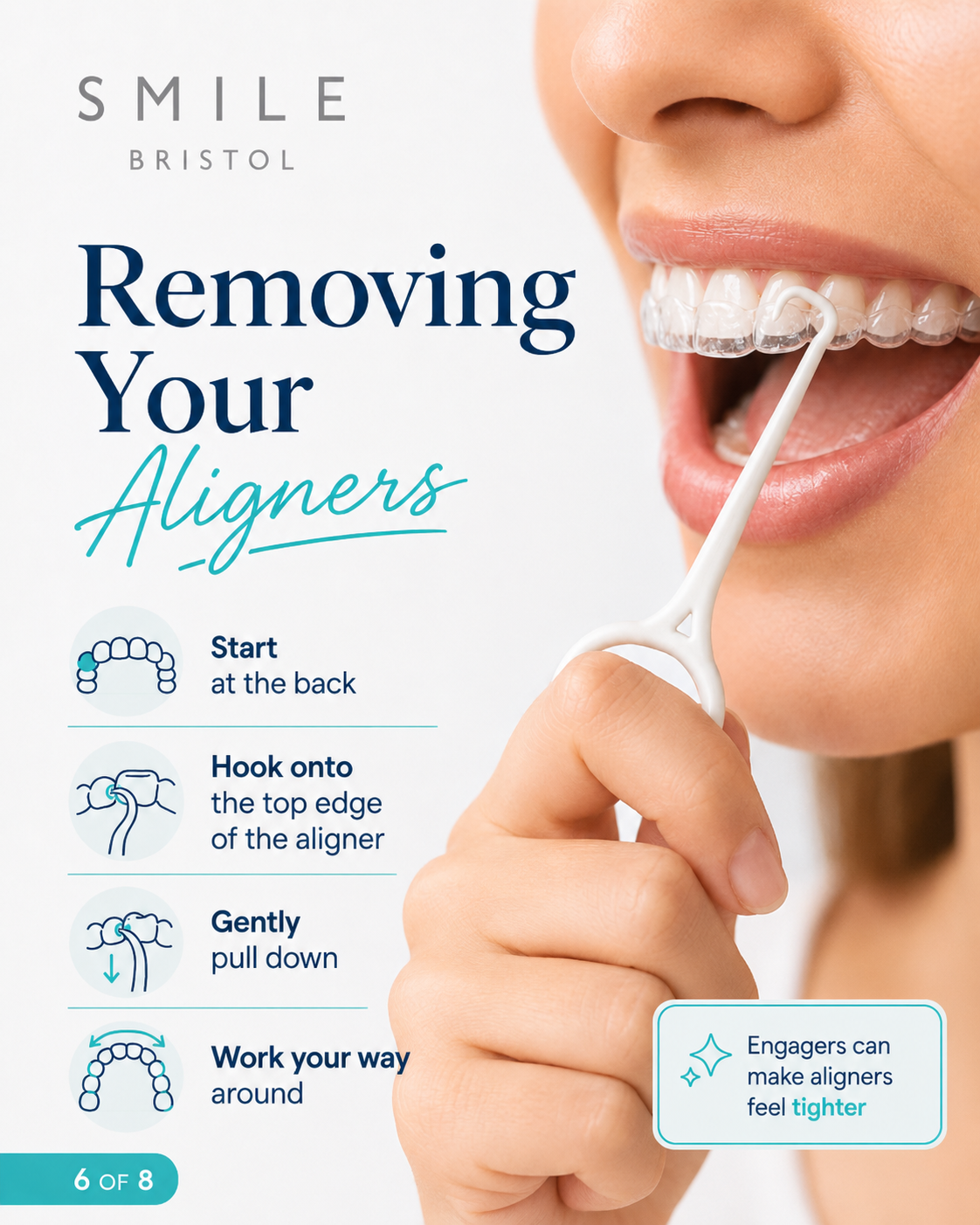
Once your engagers have been placed, your aligners may feel tighter and can sometimes be more difficult to remove.
An orthodontic aligner retriever can make taking your aligners out considerably easier.
It is usually easiest to loosen the aligner gently from the back teeth first and gradually work your way around, rather than pulling hard from the front teeth.
Take your time and avoid using excessive force.
With a little practice, taking your aligners in and out should quickly become part of your normal routine.
6. What if an engager comes off?
Don’t worry.
Engagers can occasionally come off during treatment. This is not normally an emergency and does not mean that anything has gone wrong with your treatment.
Simply contact the clinic and let us know. We will advise you and, if necessary, arrange the next suitable appointment to replace it.
Continue wearing your aligners as normal unless we advise you otherwise.
7. Keep your previous aligners
Please keep at least your last 5 sets of aligners rather than throwing them away.
Occasionally, we may need you to return temporarily to a previous aligner or we may want to compare how your teeth were fitting at an earlier stage of treatment.
Keep your previous aligners safely in their labelled packets and bring your last 5 sets with you to your review appointments.
They may prove surprisingly useful!
8. What if I lose or damage an aligner?
If you lose or badly damage an aligner, please contact the clinic for advice rather than automatically moving onto the next one.
Depending on where you are within your treatment, we may advise you to continue with your previous aligner, move forwards or plan for a replacement.
Similarly, if an aligner is not fitting properly or you notice an obvious gap between the aligner and your teeth which is not improving with chewie use, please let us know.
Never skip ahead through several aligners unless we have specifically asked you to do so.
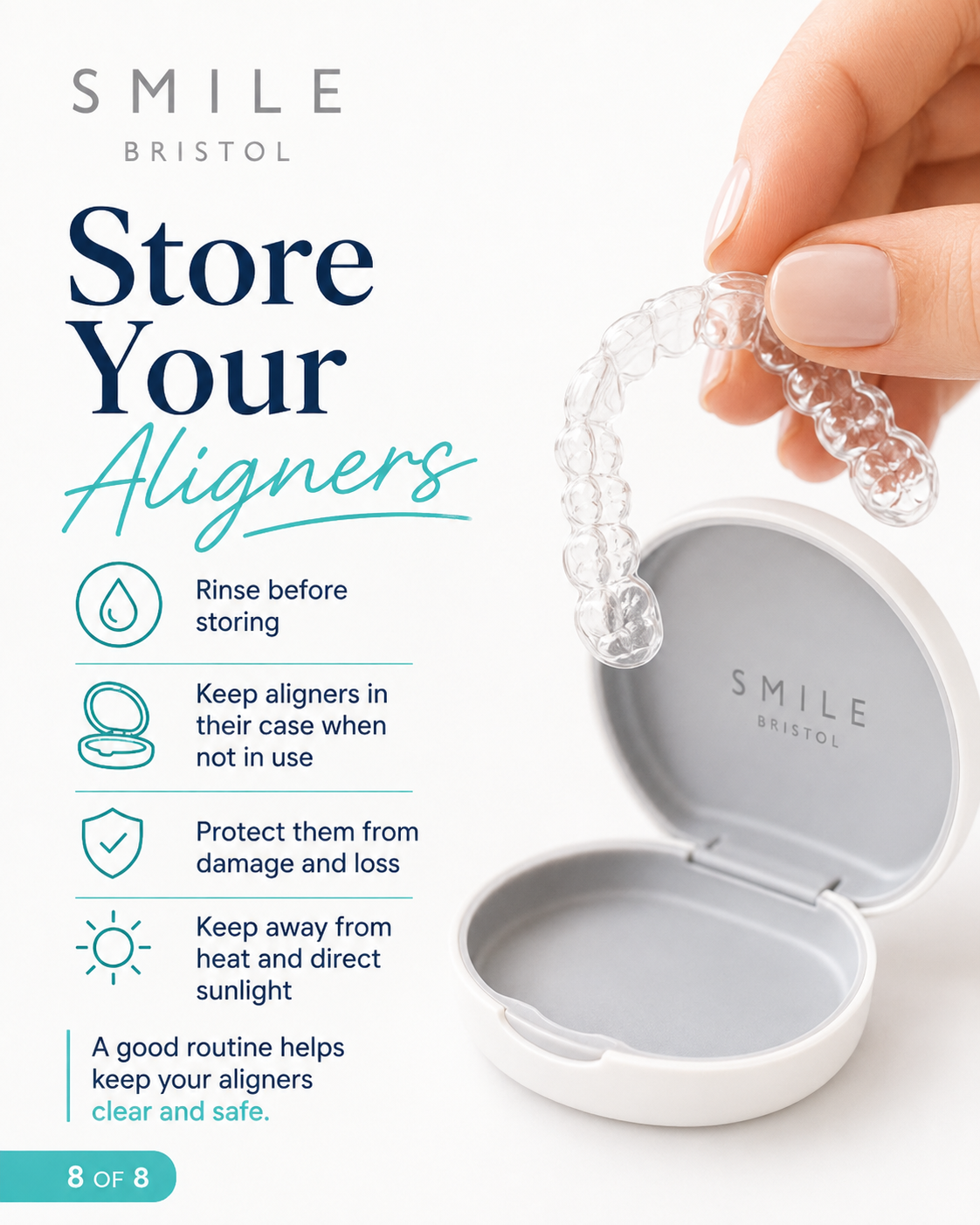
When your aligners are out of your mouth, keep them safely in their case. Avoid wrapping them in tissues or napkins, where they can easily be accidentally thrown away.
9. Your bite may feel different
Your teeth are moving throughout treatment, so the way your upper and lower teeth meet will also change.
At certain stages, your bite may therefore feel slightly different or unusual. This is often a normal part of the treatment process.
We will continue to monitor your bite as treatment progresses and make any necessary adjustments to your treatment plan.
10. Engagers, IPR and elastics
Every clear aligner treatment plan is different.
Depending on your individual plan, treatment may involve:
Engagers – small tooth-coloured attachments which help the aligners move particular teeth
IPR (interproximal reduction) – creating very small amounts of space between certain teeth where required
Elastics – sometimes used to help achieve particular tooth or bite movements
The timing of these procedures can vary, so don’t worry if your treatment does not follow exactly the same sequence as somebody else’s.
If you have been asked to wear elastics, please wear them exactly as demonstrated to you.
11. Keep your review appointments
Your review appointments allow us to check that your teeth are moving as planned and that your aligners are fitting correctly.
Clear aligner treatment does not always progress at exactly the same rate for every patient, and occasionally your treatment may need to be adjusted or your teeth rescanned.
Please attend your appointments as recommended and contact the clinic as early as possible if you need to rearrange one.
Enjoy the journey
For most people, wearing aligners quickly becomes part of their normal daily routine.
Every aligner you complete represents another small step towards your new smile.
Wear them well, keep them clean, use your chewies and follow the plan.
And most importantly, enjoy the journey — it will be over before you know it!